Integration Using Partial Fraction Decomposition
Partial fraction decomposition is the process of taking a rational function and decomposing it into simpler rational expressions which are easier to integrate.
We only use partial fractions if the rational function is proper. If

then the degree of  must be less than the degree of
  .
.
Types of Partial Fraction Decompositions
| Factor | Term in Partial Fraction |
 |  |
 | |
Irreducible quadratic | |
![\[ \frac{A_1}{ax+b} + \frac{A_2}{(ax+b)^2} +\cdots+ \frac{A_n}{(ax+b)^n}\]](https://www.racquelsanderson.com/wp-content/ql-cache/quicklatex.com-df00fc16b3a7647e3f27cb6416f6ad36_l3.png "Rendered by QuickLaTeX.com")
![\[ \frac{Ax+B}{ax^2+bx+c} \]](https://www.racquelsanderson.com/wp-content/ql-cache/quicklatex.com-b0482b98564661141efd47a698ef37a3_l3.png "Rendered by QuickLaTeX.com")
Example
![\[ \int \frac{3x+5}{x^2-x-2}\,dx \]](https://www.racquelsanderson.com/wp-content/ql-cache/quicklatex.com-8337987aa9f2e645c8965f9db2f36f51_l3.png "Rendered by QuickLaTeX.com")
Find
Factorise the denominator:
![\[ x^2-x-2=(x-2)(x+1) \]](https://www.racquelsanderson.com/wp-content/ql-cache/quicklatex.com-bc2544cc17ece1ec0b17501bb8caa4a1_l3.png "Rendered by QuickLaTeX.com")
Write
![\[ \frac{3x+5}{(x-2)(x+1)} = \frac{A}{x-2} + \frac{B}{x+1} \]](https://www.racquelsanderson.com/wp-content/ql-cache/quicklatex.com-e161ea8c483361c127e3e7603fa208b9_l3.png "Rendered by QuickLaTeX.com")
Multiplying through by
 :
:
![\[ 3x+5=A(x+1)+B(x-2) \]](https://www.racquelsanderson.com/wp-content/ql-cache/quicklatex.com-7e15b4bc14386ac0dfc0abfe463786af_l3.png "Rendered by QuickLaTeX.com")
Let  :
:
![\[ 2=-3B \]](https://www.racquelsanderson.com/wp-content/ql-cache/quicklatex.com-c827f4af13fa306a2329e9900a283a97_l3.png "Rendered by QuickLaTeX.com")
![\[ B=-\frac23 \]](https://www.racquelsanderson.com/wp-content/ql-cache/quicklatex.com-670eadcd04b7a7a04ef4a1e404a8a0b9_l3.png "Rendered by QuickLaTeX.com")
Let  :
:
![\[ 11=3A \]](https://www.racquelsanderson.com/wp-content/ql-cache/quicklatex.com-e228c4b1b894153917a72d5c3aa6a008_l3.png "Rendered by QuickLaTeX.com")
![\[ A=\frac{11}{3} \]](https://www.racquelsanderson.com/wp-content/ql-cache/quicklatex.com-fcfe50c9d1f5bd2081dec702e1e5fb86_l3.png "Rendered by QuickLaTeX.com")
Hence
![\[ \frac{3x+5}{x^2-x-2} = \frac{11}{3(x-2)} - \frac{2}{3(x+1)} \]](https://www.racquelsanderson.com/wp-content/ql-cache/quicklatex.com-8aac5e946ab8c7c33bb3171a2e527116_l3.png "Rendered by QuickLaTeX.com")
Integrating:
![\[ \int\frac{3x+5}{x^2-x-2}\,dx = \int \left( \frac{11}{3(x-2)} - \frac{2}{3(x+1)} \right) dx \]](https://www.racquelsanderson.com/wp-content/ql-cache/quicklatex.com-cf993ac47f1ba4d58a82c54e406fe6b7_l3.png "Rendered by QuickLaTeX.com")
![\[ = \frac{11}{3}\ln|x-2| -\frac23\ln|x+1| +C \]](https://www.racquelsanderson.com/wp-content/ql-cache/quicklatex.com-0b39211aca39c416da8ffa562f23c611_l3.png "Rendered by QuickLaTeX.com")
Example
Find
![\[ \int\frac{3x+2}{(x-1)^2}\,dx \]](https://www.racquelsanderson.com/wp-content/ql-cache/quicklatex.com-5885c599f43ae2af10b6f593aede84cd_l3.png "Rendered by QuickLaTeX.com")
Write
![\[ \frac{3x+2}{(x-1)^2} = \frac{A_1}{x-1} + \frac{A_2}{(x-1)^2} \]](https://www.racquelsanderson.com/wp-content/ql-cache/quicklatex.com-95b04ce788b16ea97a5561a4b8a3cf87_l3.png "Rendered by QuickLaTeX.com")
Multiplying through by  :
:
![\[ 3x+2=A_1(x-1)+A_2 \]](https://www.racquelsanderson.com/wp-content/ql-cache/quicklatex.com-e9bed66edb295c482b6ff11ba911e63f_l3.png "Rendered by QuickLaTeX.com")
Let  :
:
![\[ 5=A_2 \]](https://www.racquelsanderson.com/wp-content/ql-cache/quicklatex.com-9f62f835cb23ddd444cfac22ff372d0c_l3.png "Rendered by QuickLaTeX.com")
Let  :
:
![\[ 2=-A_1+5 \]](https://www.racquelsanderson.com/wp-content/ql-cache/quicklatex.com-5fc56f09a469a99f1401b76f7c98a6a8_l3.png "Rendered by QuickLaTeX.com")
![\[ A_1=3 \]](https://www.racquelsanderson.com/wp-content/ql-cache/quicklatex.com-5b654764c0643bda69b672f46dea3c4a_l3.png "Rendered by QuickLaTeX.com")
Therefore
![\[ \int\frac{3x+2}{(x-1)^2}\,dx = \int \left( \frac3{x-1} + \frac5{(x-1)^2} \right) dx \]](https://www.racquelsanderson.com/wp-content/ql-cache/quicklatex.com-b142a70acf15cca52f33c4a5812eca8a_l3.png "Rendered by QuickLaTeX.com")
![\[ = 3\ln|x-1| -\frac5{x-1} +C \]](https://www.racquelsanderson.com/wp-content/ql-cache/quicklatex.com-3410a5badb4e86afa0ccb5a63ddb298e_l3.png "Rendered by QuickLaTeX.com")
Example
Find
![\[ \int \frac{2x-5} {(x-1)(x^2+1)} \,dx \]](https://www.racquelsanderson.com/wp-content/ql-cache/quicklatex.com-dc7a26bace72b4bcd2a5da45e9e4cb44_l3.png "Rendered by QuickLaTeX.com")
Write
![\[ \frac{2x-5} {(x-1)(x^2+1)} = \frac{A}{x-1} + \frac{Bx+C}{x^2+1} \]](https://www.racquelsanderson.com/wp-content/ql-cache/quicklatex.com-f9abde29a770bddc44639d7a2603c816_l3.png "Rendered by QuickLaTeX.com")
Multiplying through:
![\[ 2x-5 = A(x^2+1) + (Bx+C)(x-1) \]](https://www.racquelsanderson.com/wp-content/ql-cache/quicklatex.com-c7e8fbb35bde2439ff93f5484f93676e_l3.png "Rendered by QuickLaTeX.com")
Let :
![\[ -3=2A \]](https://www.racquelsanderson.com/wp-content/ql-cache/quicklatex.com-b5c6b4456ccbf667a565e13bfa264698_l3.png "Rendered by QuickLaTeX.com")
![\[ A=-\frac32 \]](https://www.racquelsanderson.com/wp-content/ql-cache/quicklatex.com-a52d6054c18407688469506a7413b219_l3.png "Rendered by QuickLaTeX.com")
Let :
![\[ -5=-\frac32-C \]](https://www.racquelsanderson.com/wp-content/ql-cache/quicklatex.com-1793a4a90f2352ffd90854ec503ea6f4_l3.png "Rendered by QuickLaTeX.com")
![\[ C=\frac72 \]](https://www.racquelsanderson.com/wp-content/ql-cache/quicklatex.com-67e01e5d0995702c315ef33dc4c96107_l3.png "Rendered by QuickLaTeX.com")
Let :
![\[ -7=-3+\left(-B+\frac72\right)(-2) \]](https://www.racquelsanderson.com/wp-content/ql-cache/quicklatex.com-2c49008add4caf719a4ecdb45d338f57_l3.png "Rendered by QuickLaTeX.com")
![\[ -4=2B-7 \]](https://www.racquelsanderson.com/wp-content/ql-cache/quicklatex.com-65d33a202a893900427022f6782764c7_l3.png "Rendered by QuickLaTeX.com")
![\[ B=\frac32 \]](https://www.racquelsanderson.com/wp-content/ql-cache/quicklatex.com-28ad3405ce6c88f83fc7bdb7fd0b3d47_l3.png "Rendered by QuickLaTeX.com")
Hence
![\[ \int \frac{2x-5} {(x-1)(x^2+1)} \,dx = \frac12 \int \left( -\frac3{x-1} + \frac{3x}{x^2+1} + \frac7{x^2+1} \right) dx \]](https://www.racquelsanderson.com/wp-content/ql-cache/quicklatex.com-2d4b78cc0309fa639a4c25f5e73e63e0_l3.png "Rendered by QuickLaTeX.com")
![\[ = \frac12 \left( -3\ln|x-1| +\frac32\ln(x^2+1) +7\arctan(x) \right) +C \]](https://www.racquelsanderson.com/wp-content/ql-cache/quicklatex.com-88050e245c07a74000c2ca0d80cf3bfb_l3.png "Rendered by QuickLaTeX.com")
![\[ = -\frac32\ln|x-1| +\frac34\ln(x^2+1) +\frac72\arctan(x) +C \]](https://www.racquelsanderson.com/wp-content/ql-cache/quicklatex.com-26486e259665c2b0d9273abbf1f1664c_l3.png "Rendered by QuickLaTeX.com")
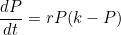
 is the growth parameter and
  is the carrying capacity.
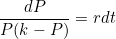
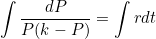



 ,
,
 ,
,
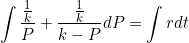



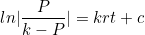
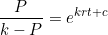
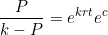
 ,
,
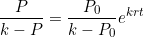
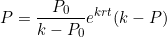



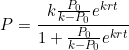
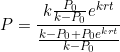
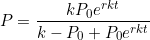

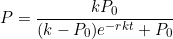


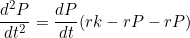

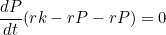
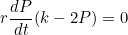
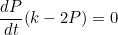





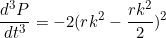
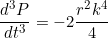
 For all values of
  and
and