Category Archives: Year 12 Mathematical Methods
Using Integration to find the Centroid of an Area
Filed under Algebra, Area, Calculus, Definite, Integration, Year 12 Mathematical Methods
Integration Question (much easier with Integration by Parts)
The Year 12 Mathematics Methods course doesn’t cover Integration by Parts, so they end up with questions like the following.
Determine the following:
(a)
(b)
Hence, determine the following integral by considering both parts (a) and (b)
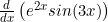

(a) Use the product rule
(1) 
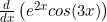
(b)
(2) 
I need to use equations  and
and  to find
  .
.
The  terms need to vanish and I need
  of the
  terms.

(3) 
(4) 
Equation  plus equation
(5) 
Integrate both sides of the equation

By the fundamental theorem of calculus, we know
![(3e^{2x}sin(3x) \right)+2 \left (e^{2x}cos(3x) \right ]_0^{\frac{\pi}{2}}=\int_0^{\frac{\pi}{2}}13e^{2x}cos(3x) \enspace dx](https://www.racquelsanderson.com/wp-content/ql-cache/quicklatex.com-340dcf46fcda38d619ef2ee2af598ebd_l3.png "Rendered by QuickLaTeX.com")


Integration by Parts
Remember 

Let  , then
and  , then



Let  , then
and . then
![\int_0^{\frac{\pi}{2}}e^{2x}cos(3x) \enspace dx=-\frac{1}{2}+\frac{3}{2}(\frac{e^{2x}}{2}sin(3x)]_0^{\frac{\pi}{2}}-\int_0^{\frac{\pi}{2}} \frac{e^{2x}}{2}(3cos(3x)) \enspace dx)](https://www.racquelsanderson.com/wp-content/ql-cache/quicklatex.com-a21e419ffd82513840001a09eec6e482_l3.png "Rendered by QuickLaTeX.com")


Collect like terms (the integrals are like)


Fundamental Theorem of Calculus
(1) 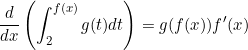
My Year 12 Mathematics Methods students are getting ready for their exam, and questions using the above idea have created a bit of consternation. I am going to work through an example, and show why the ‘formula’ works.
Example
Find
.
![\begin{equation*}=\frac{d}{dx} \left (\frac{4t^3}{3}+\frac{3t^2}{2} \right ]_2^{x^2}\end{equation}](https://www.racquelsanderson.com/wp-content/ql-cache/quicklatex.com-3591b5fb022549bc0a52bd97e02e58e3_l3.png "Rendered by QuickLaTeX.com")

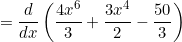
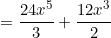
(2) 
If we used ‘formula’

(3) 
We can see equation and are the same.
More formally

Remember 

Continuous Uniform Random Variable
My Year 12 Mathematics Methods students are doing continuous random variables at the moment and I thought it would be worthwhile deriving the mean and variance formulas for a uniform continuous random variable.
The probability density function for a uniform random variable is
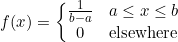
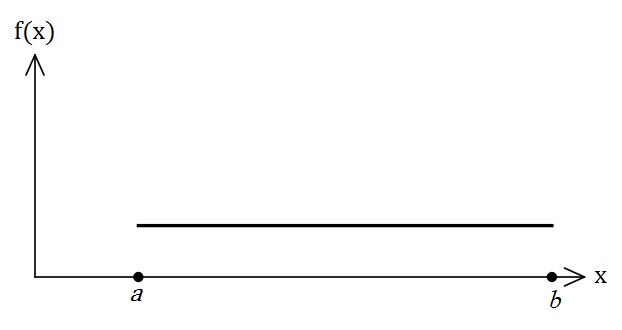
and it looks like
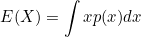
Remember, the mean  or expected value
  of a continuous random variable is
(1) 
and the variance  is
is
(2) 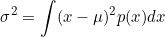
We are going to use equations and to find formulae for a uniform continuous random variable.
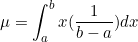
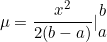

Factorise the numerator (using difference of squares)
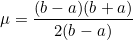
Hence,

Now for the variance

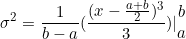




From the binomial expansion theorem, we know

Hence
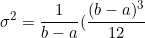
and

Differentiating f(x)=e^x
We are going to differentiate  from first principals.
Remember the definition of a derivative is
(1) 
If , then
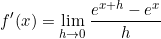
Let’s think about 
Remember  is defined as
(2) 
Let  , as
, as  hence
hence 
If , then 
(3) 
We are going to rewrite the equation as
(4) 
And then we can write equation as
(5) 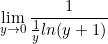
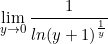
Using log laws we can write equation  as
as
(6) 
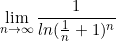
Let 
As 
equation  becomes
(7) 
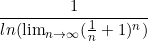
We can move the limit to inside the natural log
(8) 
And we know from the definition of that 
Hence, equation  is
is
(9) 
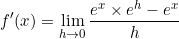
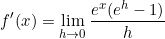
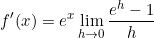
Back to our derivative
We know that 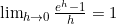 hence
hence

Filed under Calculus, Differentiation, Year 12 Mathematical Methods
Differentiating the Tangent Function
Remember 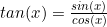 .
.
I use the quotient rule to differentiate  .
.
(1) ![\begin{equation*}\frac{d}{dx}(\frac{f(x)}{g(x)})=\frac{f'(x)g(x)-g'(x)f(x)}{[g(x)]^2}\end{equation*}](https://www.racquelsanderson.com/wp-content/ql-cache/quicklatex.com-d7f44004ea63a9b3172080e77f4c66d8_l3.png "Rendered by QuickLaTeX.com")
If  then from equation
(2) ![\begin{equation*}h'(x)=\frac{cos(x)cos(x)-(-sin(x)sin(x))}{[cos(x)]^2}\end{equation*}](https://www.racquelsanderson.com/wp-content/ql-cache/quicklatex.com-61cae2669c09f225f8776d3406fc68d9_l3.png "Rendered by QuickLaTeX.com")
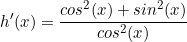
(3) 
Remember the Pythagorean identity
(4) 
Hence
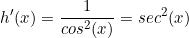
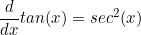
(5) 
Differentiating Trigonometric Functions
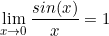
In the last post we looked at two trig limits:
(1) 
(2) 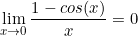
We are going to use these two limits to differentiate sine and cosine functions from first principals.


Use the trig identity





Evaluate the limits

Hence,  .
.
Now we are going to do the same for  .
.

Use the trigonometric identity




Evaluate the limits

Hence 
Filed under Calculus, Differentiation, Identities, Trigonometry, Year 12 Mathematical Methods
Trigonometric Limits

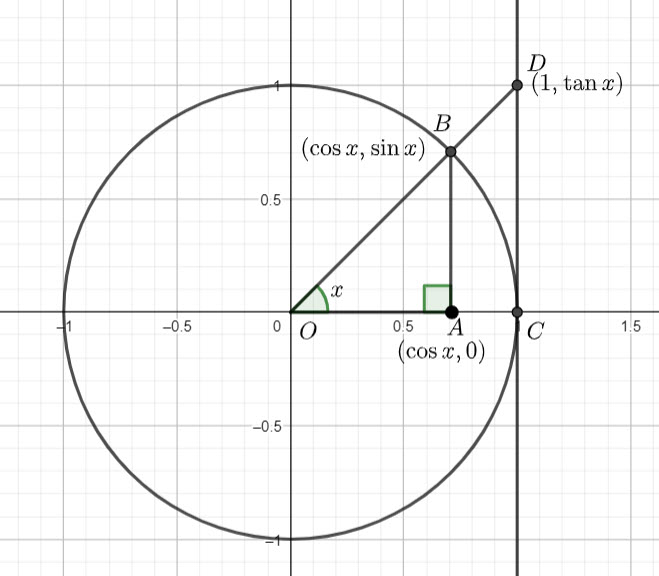
Remember  , hence
  and the co-ordinate of
  is
is  .
.
 , hence
  and the co-ordinate of
  is
is 
And from the definition of  we know
  is the point
Consider the areas of triangle  , sector
  , and triangle
  .
.
We know from inspection of the above diagram that
Area  Area
Area  Area
Area
Which means,

We can ignore all of the halves.

Remember

Divide everything by  (as we are in the first quadrant we know
  , so we don’t need to worry about the inequality)

Invert everything and change the direction of the inequalities)

I am going to rewrite it as follows

because I like to use less thans rather than greater thans.
Now what happens as  tends to
  ?
?

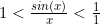
Hence by the squeeze theorem 
Now we know this limit, we are going to use it to find 
Multiply by 

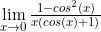
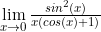


If we evaluate the limits,

Hence, 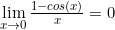
In the next post we are going to use these limits to differentiate sine and cosine functions.
Deriving the Quotient Rule for Differentiation
Like we did for the product rule, we are going to derive the differentiating rule for functions in the form  .
.
Something like, 
Remember the first principals limit

If , then

Find a common denominator for the numerator (i.e.  )
)

To make things a bit easier I am going to multiply by  rather than having
  as the denominator

Now I am going to add and subtract 

Factorise

Change the sign in the middle

Separate the limits

which simplifies to

![y'=\frac{f'(x)g(x)-g'(x)f(x)}{[g(x)]^2}](https://www.racquelsanderson.com/wp-content/ql-cache/quicklatex.com-ec8f5e2d4e8598c189b9b63645ff71ec_l3.png "Rendered by QuickLaTeX.com")
In words
The derivative of the top times the bottom take the derivative of the bottom times the top all over the bottom squared
Example



Exam questions usually specify no simplifying.
Filed under Calculus, Differentiation, Quotient Rule, Year 12 Mathematical Methods
Deriving the Product Rule for Differentiation
In my previous post we looked at the Chain Rule for Differentiation, this post is on the Product Rule. Differentiating a function in the form  .
.
For example, 
Remember differentiating from first prinicpals:




By subtracting and then adding  we haven’t changed the limit, but it means we can do some factorising.


When we evaluate the limits

Example
Find the derivative of
I remember the rule in words ‘derivative of the first times the second plus the derivative of the second times the first’.



Most exam questions have ‘don’t simplify’, so the first line of working above would be enough.
Onto the Quotient Rule.
Filed under Calculus, Differentiation, Product Rule, Year 12 Mathematical Methods