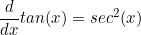
My Year 12 Specialist Students are using complex numbers to prove trigonometric identities.
Things like

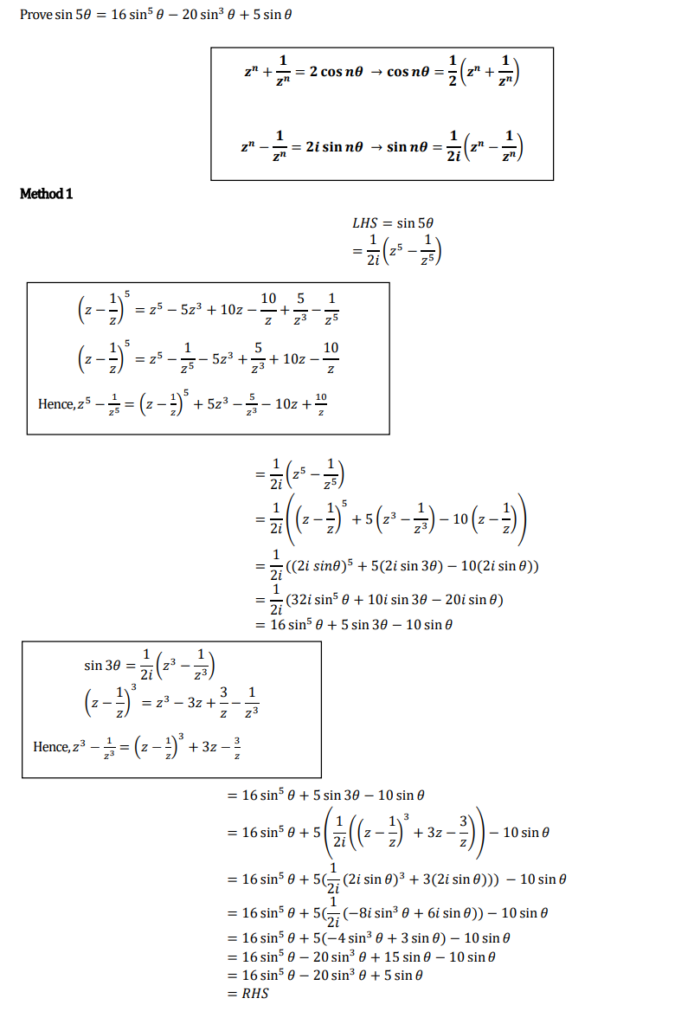
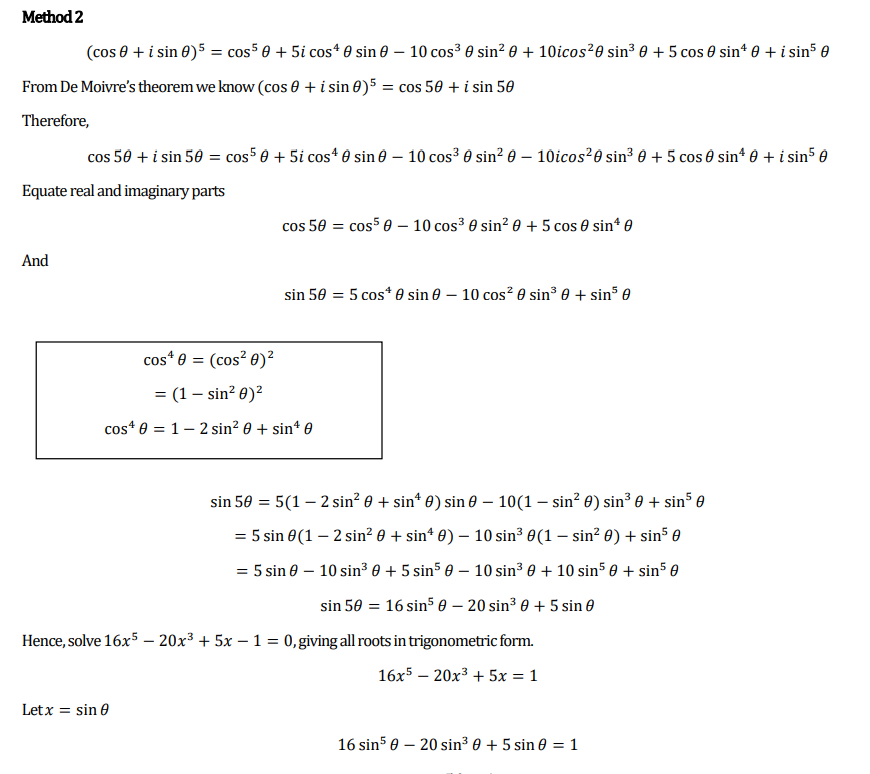
Method 2 might be a little bit easier depending upon how your brain works.
My Year 12 Specialist Students are using complex numbers to prove trigonometric identities.
Things like
Method 2 might be a little bit easier depending upon how your brain works.
Solve  for
for 
Remember the identity
(1) 
Hence

Now I have


 or
or 

 for
for 
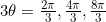

Hence 
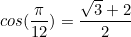
Find exactly 
We must be able to find an arithmetic combination of the exact values we knew to find  .
.


I re-arranged as above, so I could take advantage of  and
and 
Useful identities      |






Hence,



Use the quadratic equation formula


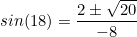
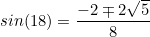
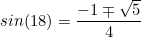
As  ,
, 
|
We are going to find a matrix to rotate a point about the origin a number of degrees (or radians).


 and
and  are equidistant from the origin. I.e.
Remember, anti-clockwise angles are positive.


Use the cosine addition identity.


(1) 
We will do the same for 
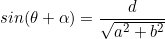

Use the sine addition identity.


(2) 
Let  be the rotation matrix, then

Hence must be
(3) 
Find the image of the line  after it is rotated
  about the origin.
I am going to select two points on the line and transform them.


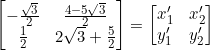
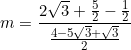
We can then find the equation of the line.




My Year 11 Specialist Mathematics students are working on Trig identities. We came across this question
Without the use of a calculator, evaluate
(a)(b)
OT Lee Year 11 Specialist Mathematics textbook
I spent a bit of time thinking about the question. Can you use a product to sum identity twice? But I was always being left with an angle that doesn’t have a nice exact value.
I tried a few things, had a chat to Meta AI, and finally stumbled upon this method.
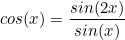
Remember

Which can be rearranged to
(a) 
Which simplifies to

Now 
Hence 
And we will do the same for part (b)

Which simplifies to

Now 
Hence 
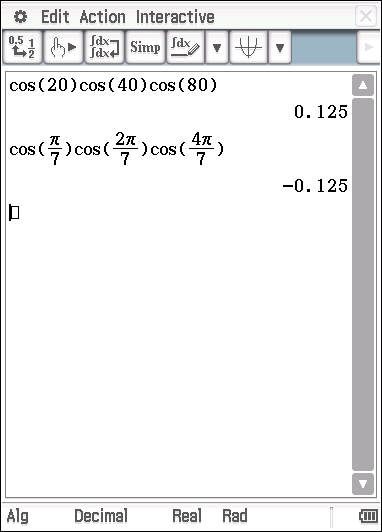
And then I had to test them on my Classpad.
Let’s think about the sine and cosine addition and subtraction trig identities.
(1) 
(2) 
If we add equation  and
and  , we get

Hence, 
If we subtract equation from equation , we get

Hence, 
What about the cosine addition and subtraction idenities?
(3) 
(4) 
If we add equation  and
and  , we get

Hence, 
If we subtract from , we get

Hence, 
These are the product to sum identities.
(1) Solve  for
for 
Remember,



Therefore,  and
and 






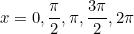
Hence 
(2)Solve  for
for 
Therefore,  and
and 




 and
and 




Hence 
Using an appropriate double angle identity, find the exact value of
The double angle identity for sine is
(1) 
That means  is either
  or
or  .
.
It must be as  as there are exact values for
Hence,
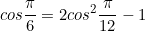
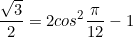
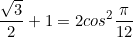
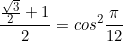
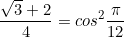
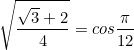
As is in the first quadrant, we don’t need to consider the negative version.
Filed under Algebra, Identities, Trigonometry, Year 11 Mathematical Methods
Deriving the addition and subtraction trigonometric identities.
We will start with cosine, and use the result to derive the remaining identities.
Proving  .
.
and  are represented in the unit circle below.
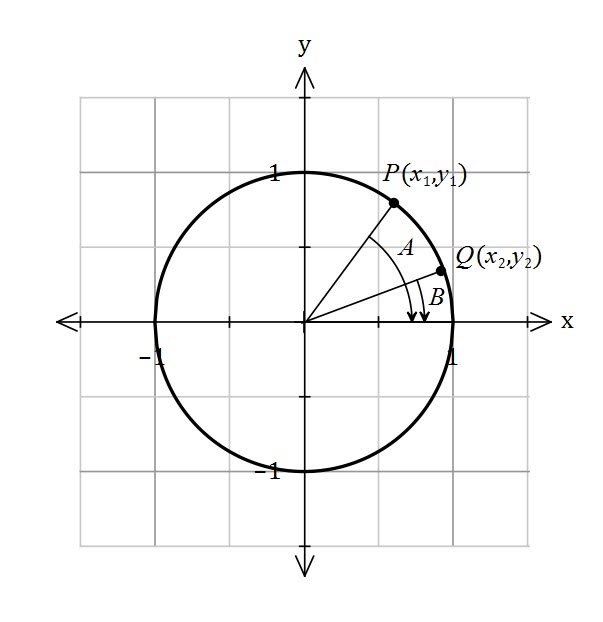
Remember  and
and 
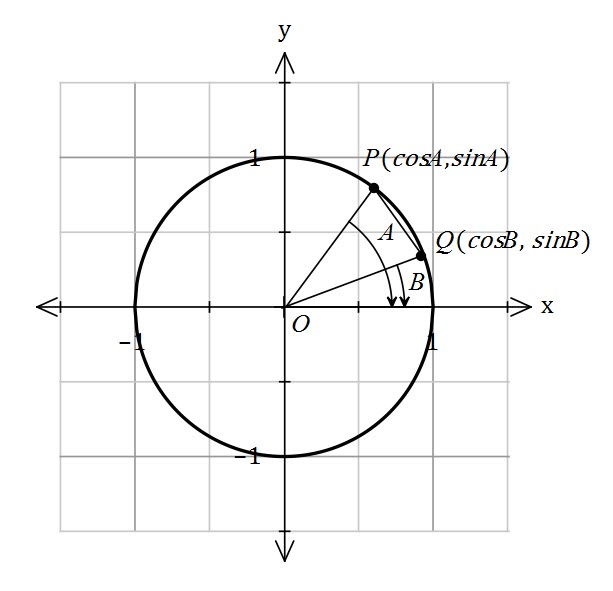
Using the cosine rule and triangle  , find


Using the distance between points, find



Remember the Pythagorean identity


Hence

(1)
We can then use this identity to find  .
.


Remember  and
and 

(2)
We can also find 
Remember, 



(3)
We can use equation to find 



(4) 
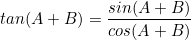
And we can use both the sine and cosine identities to find 
Remember 


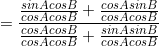
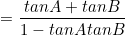
(5) 
and
(6) 
This problem is from The Geometry Forum Problem of the Week June 1996
In triangle ABC, AC=18 and D is the point on AC for which AD=5. Perpendiculars drawn from D to AB and CB have lengths of 4 and 5 respectively. What is the area of triangle ABC?
I put together a diagram (in Geogebra)
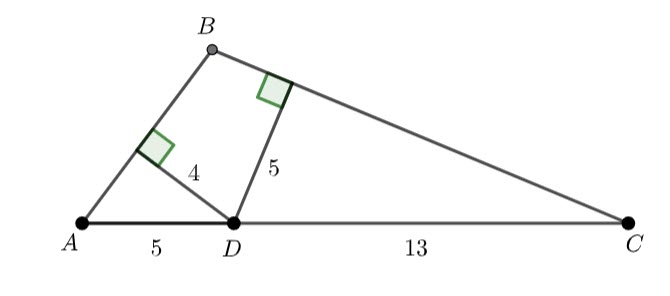
Add points P and Q

Triangle APD and triangle DQC are right angled. Using pythagoras,  and
and 
 is a cyclic quadrilateral and
  is the diameter. I am not sure if this is useful, but it is good to notice.
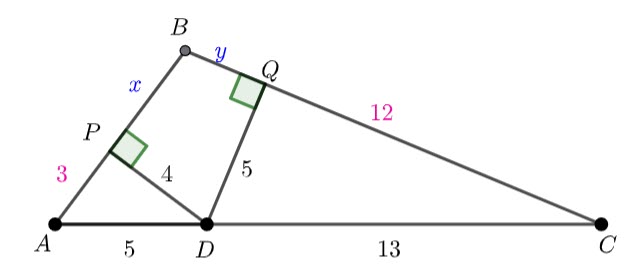





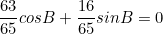



If  then
then 
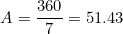
Now,
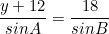


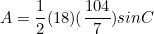
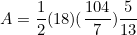
Hence the Area is
Filed under Area, Finding an area, Geometry, Identities, Non-Right Trigonometry, Pythagoras, Trigonometry
Remember 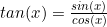 .
.
I use the quotient rule to differentiate  .
.
(1) ![\begin{equation*}\frac{d}{dx}(\frac{f(x)}{g(x)})=\frac{f'(x)g(x)-g'(x)f(x)}{[g(x)]^2}\end{equation*}](https://www.racquelsanderson.com/wp-content/ql-cache/quicklatex.com-d7f44004ea63a9b3172080e77f4c66d8_l3.png "Rendered by QuickLaTeX.com")
If  then from equation
(2) ![\begin{equation*}h'(x)=\frac{cos(x)cos(x)-(-sin(x)sin(x))}{[cos(x)]^2}\end{equation*}](https://www.racquelsanderson.com/wp-content/ql-cache/quicklatex.com-61cae2669c09f225f8776d3406fc68d9_l3.png "Rendered by QuickLaTeX.com")
(3) 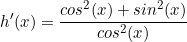
Remember the Pythagorean identity
(4) 
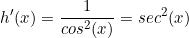
Hence
(5)