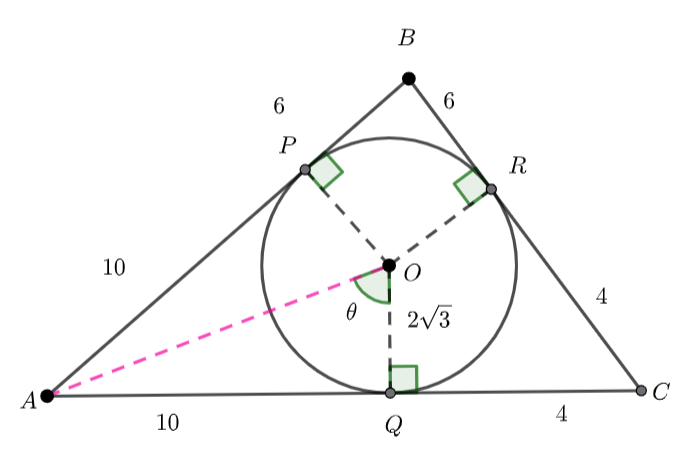
The blue shaded area is the area of triangles  and
and  subtract the sector
  .
.
We can use Heron’s law to find the area of the triangle 

where 

We also know the area of triangle  where
where  is the radius of the inscribed circle.
Hence,  and
and 
We know  , and
, and  – tangents to a circle are congruent.
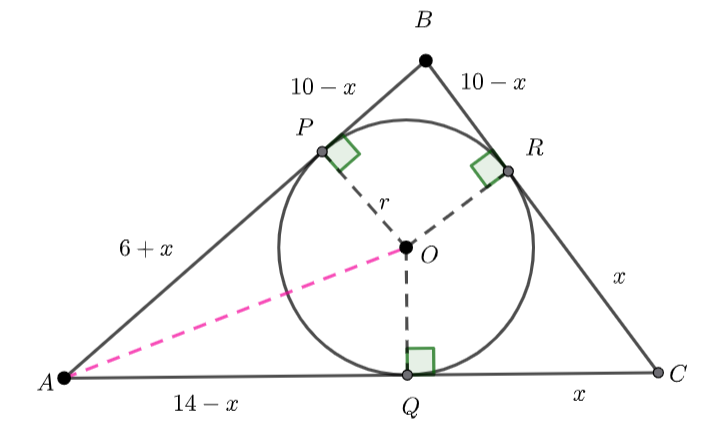

(1) 
(2) 
Area 
Area  Area
Area 
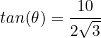

Area of sector 
Blue area = 
 and
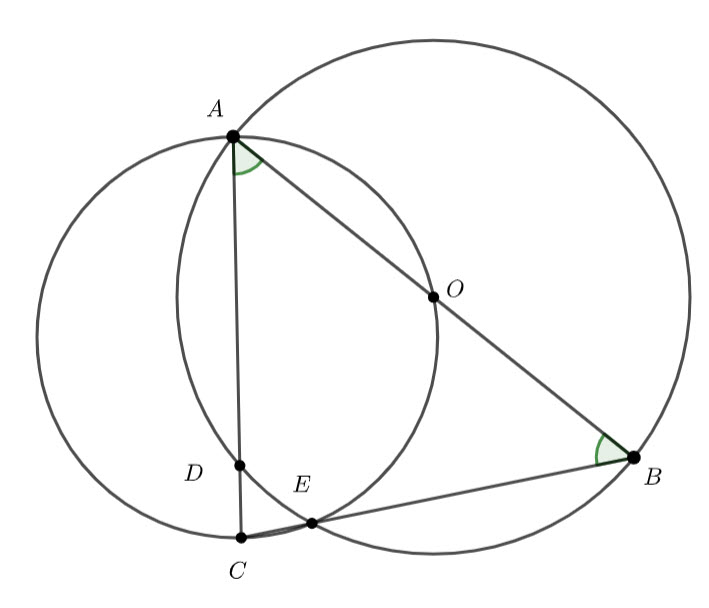
and  lie on the circle with centre
  . If
. If  and
and  , determine with reasoning
  and
and 

 – radii of the circle.
 is isosceles and
  – equal angles isosceles triangle.
 – angle at the centre twice the angle at the circumference.

 – angles on a straight line are supplementary
 – equal angles isosceles triangle and the angle sum of a triangle.
 – angle at the circumference subtended by the same arc are congruent.
 – angles at the circumference subtended by the same arc are congruent.
 – equal angle isosceles triangle

 . Then the distance the hour hand moves is
  (The angle between the hands at 2pm is
  )
) per minute, and the rate the minute hand moves is
  per minute.


 , the change in time is
  minutes and
  seconds. Hence the time is
  pm
pm
 and
and  are points on the circumference of the larger circle.
  and
and  are points on the circumference of the smaller circle. Show that
  .
.  and
and  are straight lines.
 (radii of the larger circle)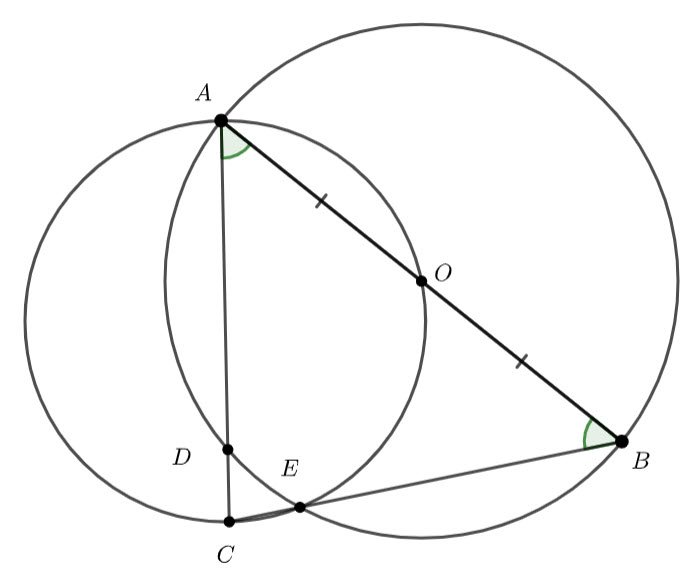
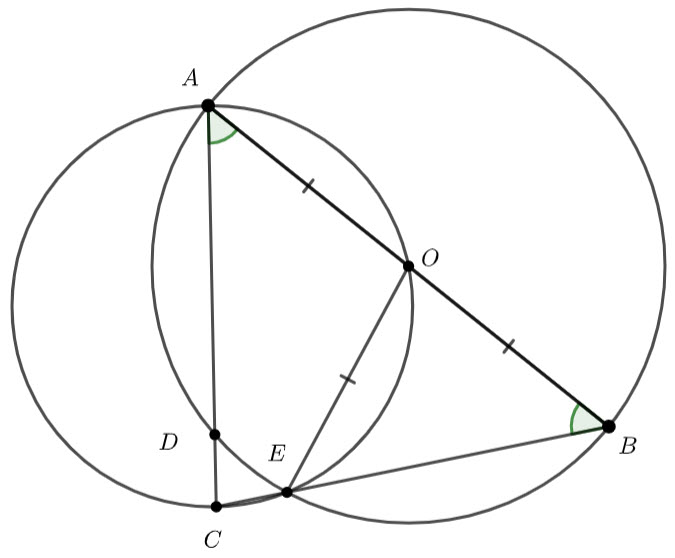
 .
. is a cyclic quadrilateral.
  (
( is a cyclic quadrilateral)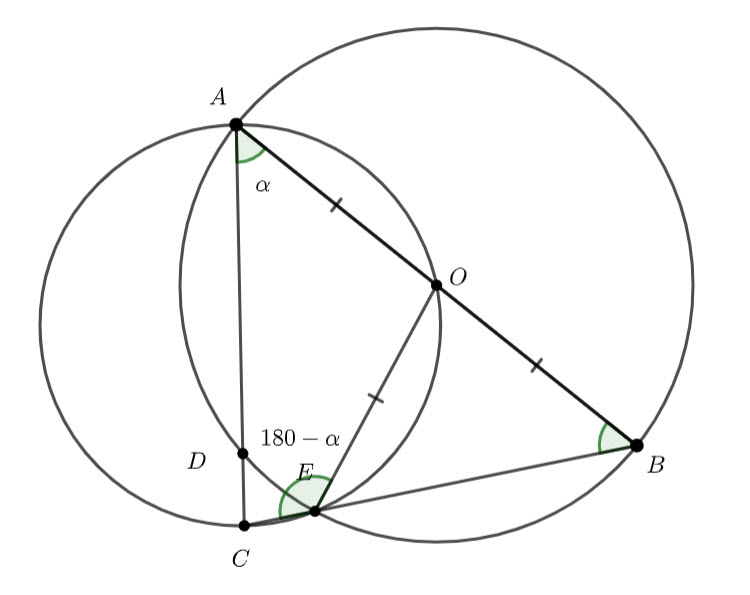
 is a straight line
  .
.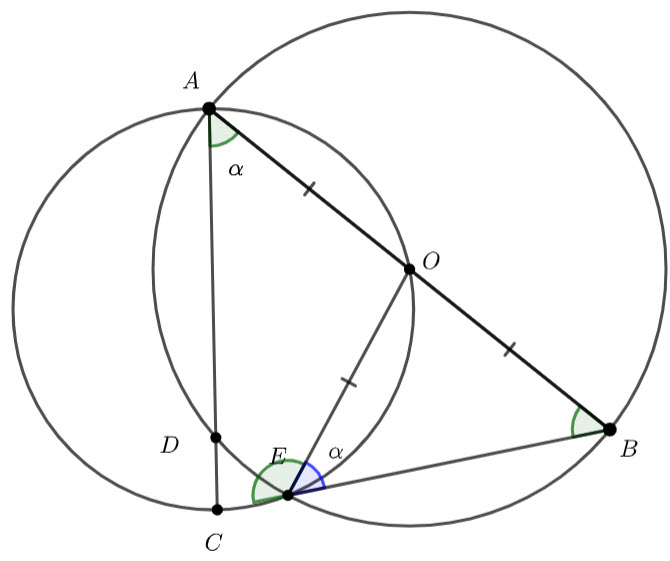
 is an isosceles triangle.

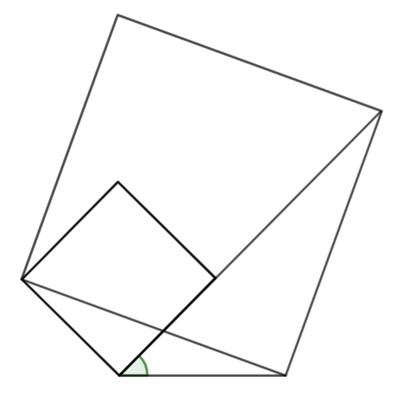
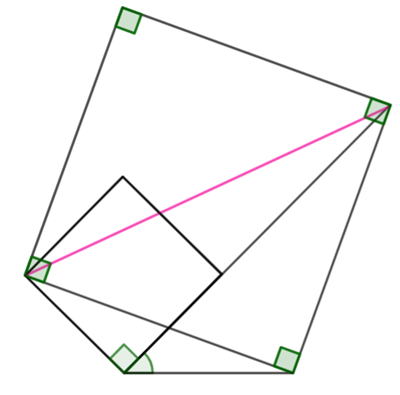
 , we know there is a circle, which has the diagonal of the square as its diameter (see second image below).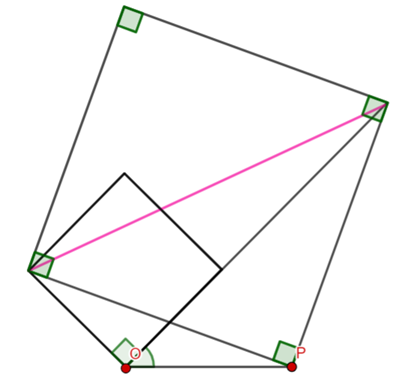
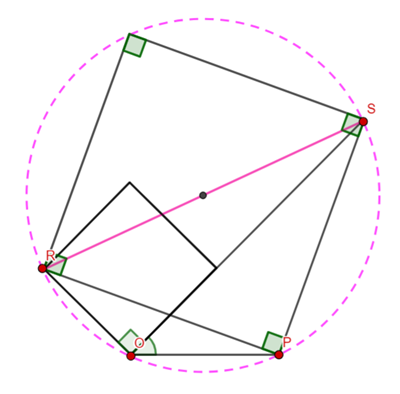
 is
is  (Angle between the diagonal and side of a square)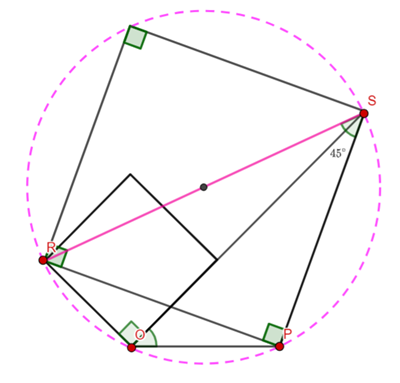
 is a
is a 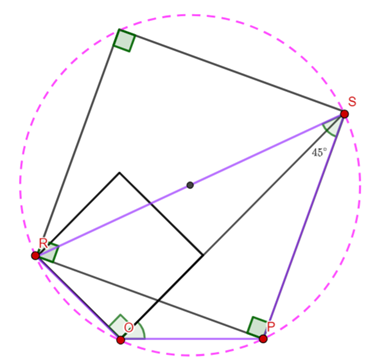

 ,
,  must be