Solve  for
for 
Remember the identity
(1) 
Hence

Now I have


 or
or 

 for
for 
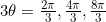

Hence 
Solve for
Remember the identity
(1)
Hence
Now I have
or
for
Hence
I usually choose to use synthetic division when factorising polynomials, but I know some teachers are unhappy when their students do this. So for completeness, here is my PDF for Polynomial Long Division.
In the diagram below,  and
and  lie on the circle with centre
  . If
. If  and
and  , determine with reasoning
  and
and 

We know  – radii of the circle.
Which means,  is isosceles and
  – equal angles isosceles triangle.
 – angle at the centre twice the angle at the circumference.


This means  – angles on a straight line are supplementary
 – equal angles isosceles triangle and the angle sum of a triangle.
 – angle at the circumference subtended by the same arc are congruent.

 – angles at the circumference subtended by the same arc are congruent.
 – equal angle isosceles triangle
Hence 
Completing the square is useful to
When completing the square we take advantage of perfect squares. For example, 
 and
and 
Put  into completed square form.
What perfect square has an  term?
term?

We don’t want  , we want
  , so subtract


What about a non-monic quadratic? For example,

Factorise the 

And continue as before
![2[(x+3)^2-9+\frac{11}{2}]=2[(x+3)^2-\frac{18}{2}+\frac{11}{2}]=2[(x+3)^2-\frac{7}{2}]=2(x+3)^2-7](https://www.racquelsanderson.com/wp-content/ql-cache/quicklatex.com-75a4ad924f4dac2900b0825b3dbc5eb1_l3.png "Rendered by QuickLaTeX.com")

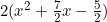
![2[(x+\frac{7}{4})^2-(\frac{7}{4})^2-\frac{5}{2}]](https://www.racquelsanderson.com/wp-content/ql-cache/quicklatex.com-86decb178d67f6e763e3418b68dd4609_l3.png "Rendered by QuickLaTeX.com")
![2[(x+\frac{7}{4})^2-\frac{49}{16}-\frac{40}{16}]](https://www.racquelsanderson.com/wp-content/ql-cache/quicklatex.com-46cc98a61881eb23836f41e52a308e56_l3.png "Rendered by QuickLaTeX.com")
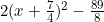
![2[(x+\frac{7}{4})^2-\frac{89}{16}]](https://www.racquelsanderson.com/wp-content/ql-cache/quicklatex.com-9c430d81a00ab51437da9037c1141aac_l3.png "Rendered by QuickLaTeX.com")

A circle has equation
(a) Find the centre and radius of the circle.
Pointsand
lie on the circle such that the origin is the midpoint of
.
(b) Show that
(a)We need to put the circle equation into completed square form


The centre is  and the radius is
  .
.
(b)Draw a diagram
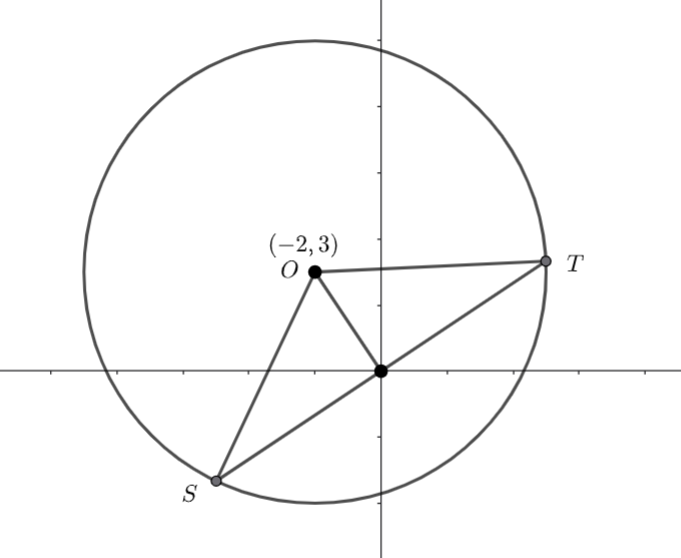
We know  and
and  are radii of the circle. Hence
  is isosceles and the line segment from to the origin is perpendicular to .
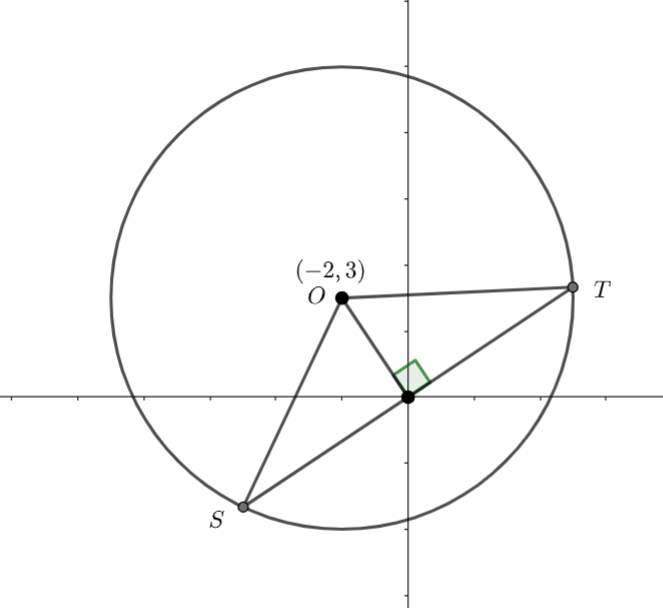
 and the distance from to the origin is

We can use Pythagoras to find the distance from the origin to .

Hence 

